Welcome to the Diocese of Liverpool
Geographically, the Diocese stretches from the Irish Sea coast at Southport, through the city of Liverpool, to the industrial and residential areas of St Helens, Widnes, Wigan and Warrington. This is a region shaped by a strong sense of identity and a deep-rooted pride in place.
The Diocese was formed in 1880 from part of the Diocese of Chester, and is one of the 42 Dioceses that make up the Church of England. The Diocese is in the Province of York – overseen by the Archbishop of York.
The Diocese of Liverpool includes:
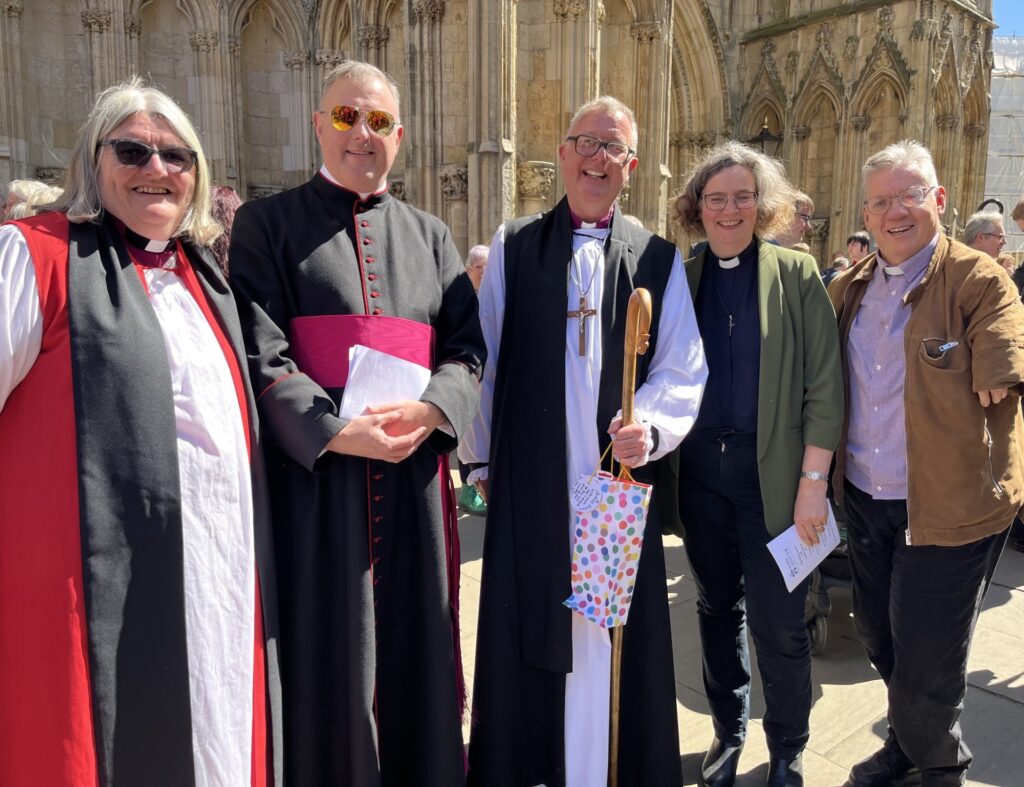
2 Bishops
- The Interim Bishop of Liverpool; Bishop Ruth Worsley
- The Bishop of Warrington; Bishop Simon Robinson
3 Archdeaconries
Across the Diocese, we serve a population of approximately 1.6 million people through 137 parishes including 10 larger single parishes created during the Fit for Mission programmes, which incorporate 61 previous single parishes. Our ministry is supported by around 275 licensed clergy, 149 Readers and 23 Local Missional Leaders.
Current Archdeacon of Liverpool: Archdeacon Miranda Threlfall-Holmes
The Archdeaconry of Liverpool covers the area within and around Liverpool city centre and is the most densely populated of the Diocese’s three archdeaconries.
Liverpool North & Walton Deanery covers much of the north and west of the city and includes eighteen churches across eleven parishes. The deanery includes areas facing significant economic and social challenge and sustaining ordained ministry across the area remains an ongoing concern. It also has several landmark churches, including Liverpool Parish Church, which has a significant civic ministry at the heart of the city. Also key is the SDF-funded Next Generations
Project in Everton, which seeks to grow new young disciples through an innovative hub-and-spoke model of mission and discipleship.
Liverpool South Deanery stretches from the inner-city areas around Wavertree to the southern suburbs of the city. The deanery includes several large and flourishing suburban churches, alongside smaller churches serving more economically challenged communities. There are fifteen churches within the deanery, including one of the earliest Local Ecumenical Partnerships in the country.
West Derby Deanery was one of the deaneries that piloted Fit for Mission, with eight of its eleven parishes coming together to form a Larger Single Parish, one year ago. The deanery includes densely populated residential communities, alongside areas such as Croxteth Park and West Derby village. It is an area with a strong history of community engagement and social justice, and continues to reflect both the opportunities and challenges of urban ministry.
Toxteth & Wavertree Deanery is one of the Diocese’s most diverse deaneries, encompassing a wide range of church
traditions, communities and social contexts. It includes churches under alternative episcopal oversight, as well as the original Open Table LGBTQIA+ congregation. Housing and community contexts vary significantly across the deanery, from student accommodation and areas of multiple deprivation to more affluent residential neighbourhoods. The deanery includes fifteen churches across nine parishes, with six parishes currently working towards the formation of a new Larger Single Parish under Fit for Mission, while other churches are also exploring revitalisation and fostering closer partnerships.
Current Archdeacon of Knowsley and Sefton: Archdeacon Pete Spiers
Sefton South Deanery includes Bootle, Litherland, Netherton, Seaforth and Waterloo. The deanery contains some of the most economically challenged communities within the Diocese, alongside areas of housing growth and ongoing regeneration, particularly around Bootle town centre. Churches across the deanery are deeply engaged in their local communities and several parishes, together with neighbouring churches in Sefton North, are currently
in the “acting as if” stage of Fit for Mission, exploring new models of collaboration and shared leadership.
Sefton North Deanery encompasses Crosby, Blundellsands, Formby, Hightown, Maghull, Melling and Aintree. Predominantly suburban in character, the deanery also includes areas of countryside and coastline, with communities shaped by both commuter life and longstanding local identity. The deanery includes some of the region’s most recognised coastal landscapes, including Crosby Beach.
North Meols Deanery includes Ainsdale, Birkdale and Southport. While often perceived as comparatively affluent, the deanery also contains areas experiencing significant deprivation and social need. The community was profoundly affected by the 2024 attack on a children’s dance class in Southport and the disorder that followed. In the aftermath of these events, churches played an important role in supporting the community, working alongside civic and faith partners in responding to grief, trauma and division. This has included the strengthening of interfaith relationships and the development of new opportunities for community partnership.
Ormskirk Deanery stretches from Aughton and Burscough across to Skelmersdale and Rainford, combining market towns, villages and more urban communities. The deanery includes Edge Hill University, which brings a significant student population and opportunities for engagement with younger generations. Ormskirk Parish Church is in the process of becoming a Resource Church, with a particular focus on mission, discipleship and younger adults within both the town
and university community.
Huyton Deanery includes Knowsley Village, Huyton, Roby, Whiston, Kirkby and Prescot. Churches across the deanery have developed strong relationships with local communities, schools and civic partners, with Knowsley Council recognising the significant contribution churches make to local life. The deanery established the Deanery Academy, which provides training and development opportunities for lay leaders and church members across a wide range of areas, reflecting a strong commitment to equipping local leadership and deepening discipleship
Current Archdeacon of St Helens and Warrington: Archdeacon Simon Fisher
Winwick Deanery is a geographically broad and varied deanery, encompassing towns, villages and former industrial communities including Newton-le-Willows, Culcheth, Croft, Burtonwood, Lowton, Golborne and Haydock. While parts of the deanery retain a more rural character, it also includes areas facing significant economic and social challenge. Many churches are historic and well-loved within their communities, bringing both opportunities for mission and ongoing pressures associated with maintaining large buildings. Much of the deanery has recently entered the “acting as if” stage
of Fit for Mission, with churches beginning to work more collaboratively across parish boundaries.
Warrington Deanery is centred on a large and rapidly growing town with significant demographic change and a substantial commuter population. The deanery includes older industrial neighbourhoods, new-town estates, expanding housing developments and major retail and business areas, alongside communities experiencing both affluence and considerable deprivation. Covering the borough north of the River Mersey, the deanery has recently taken a significant step within Fit for Mission, with twelve churches coming together to form the new Parish of Warrington in 2026.
St Helens Deanery was among the first deaneries to pilot the Fit for Mission approach. Church St Helens became one of the Diocese’s earliest Larger Single Parishes, bringing together 11 of its 18 churches around a shared vision for mission and renewal, while the wider deanery also includes several single-parish churches. The town itself has been shaped by industries including glassmaking, coal mining and railways, alongside a strong sporting and civic identity.
Wigan Deanery occupies a distinctive place within the Diocese. As the only substantial part of the Diocese within Greater Manchester, it combines a strong civic identity with deep industrial roots and a long tradition of resilience and community life. The Transforming Wigan programme, established in 2014, became a significant forerunner to the Diocese’s wider Fit for Mission approach. Today, Church Wigan operates as a single team ministry across the deanery and has become an important example of collaborative leadership, church planting and the development of new worshipping communities.
Widnes Deanery is the smallest deanery in the Diocese, comprising six parishes within a compact but distinctive town
historically shaped by the chemical industry and its position on the River Mersey crossing into Runcorn. The deanery forms
the northern half of the borough of Halton, with Runcorn situated within the Diocese of Chester. Discernment around Fit for Mission has developed differently here than in some neighbouring deaneries, with varying levels of engagement across churches. This has highlighted the importance of locally shaped approaches to collaboration, mission and future sustainability
A Cathedral
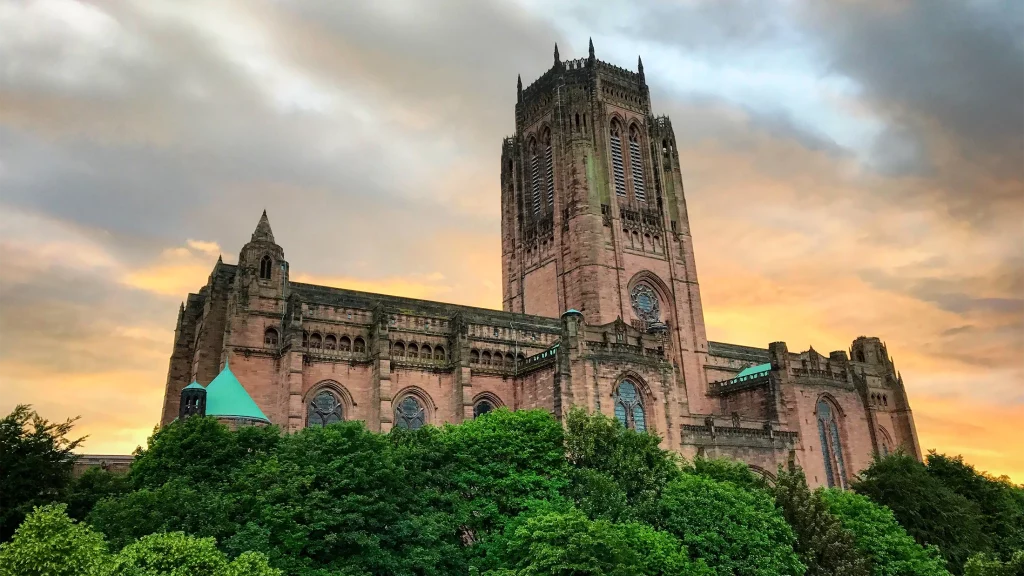
The largest Cathedral in the country which saw over 750,000 visitors through its doors in 2025, Liverpool Cathedral stands as an iconic place of prayer, worship, reflection and culture.
At its heart is a pattern of worship shaped by daily prayer and a strong choral tradition. Sunday worship reflects a diverse and growing community, including traditional choral services, new worshipping communities, and an established Persian congregation worshipping weekly in Farsi. The Cathedral has a strong ecumenical partnership with the Metropolitan Cathedral at the other end of Hope Street. Thousands of people each year join services held between the two cathedrals. The Cathedral also plays a vital role in the public life of the city and region, hosting civic services, diocesan gatherings, and national moments of remembrance and celebration. It is both a spiritual home for the Diocese and a place of welcome for the wider community, as well as a major visitor destination and an important part of the region’s cultural and tourism life.
- Liverpool Cathedral, St James Mount, Liverpool L1 7AZ
A network of 119 schools and academies, serving nearly 35,000 pupils
Our schools are located across all deaneries and span eight local authority areas. The Diocese has a mixed economy of maintained schools and academies, with just under half of our schools now part of academy structures. Nine Multi Academy Trusts operate within the Diocese, all with a clear Church of England rooted ethos, and some including community schools.
A distinctive feature of our educational landscape is the strength of ecumenical partnership. Six schools are held in joint foundation with the Catholic Archdiocese, two with the Methodist Church, and one with the United Reformed Church.
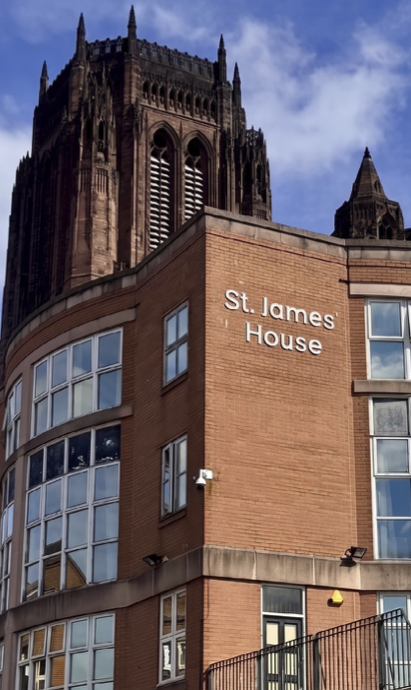
St James’ House
The diocesan offices are based at St James’ House, adjacent to Liverpool Cathedral, bringing together a range of core functions that support the life and mission of the Diocese. A team of staff serve under the leadership of the Diocesan Secretary and the Senior Leadership Team, and work alongside colleagues from the Archdeacons’ offices, the Diocesan Board of Education, and the Cathedral.
- St James’ House, 20 St James Rd, Liverpool L1 7BY
- Contact someone at St James’ House